React Native vs Flutter vs Ionic: An Advanced Technical Comparison
for Modern Mobile App Development
Choosing the right mobile app development framework is a that directly impacts performance, scalability, development cost, and long-term maintainability. With cross-platform development becoming the industry standard, have emerged as the top contenders.
This advanced comparison explores these frameworks from a helping organizations select the best solution for high-performance mobile applications.
Cross-Platform Mobile Development: Why It Matters
Cross-platform frameworks enable developers to write a single codebase that runs across iOS and Android, significantly reducing:
- Development and maintenance costs
- Time to market
- Resource dependencies
However, not all frameworks offer the same level of —making framework selection critical.
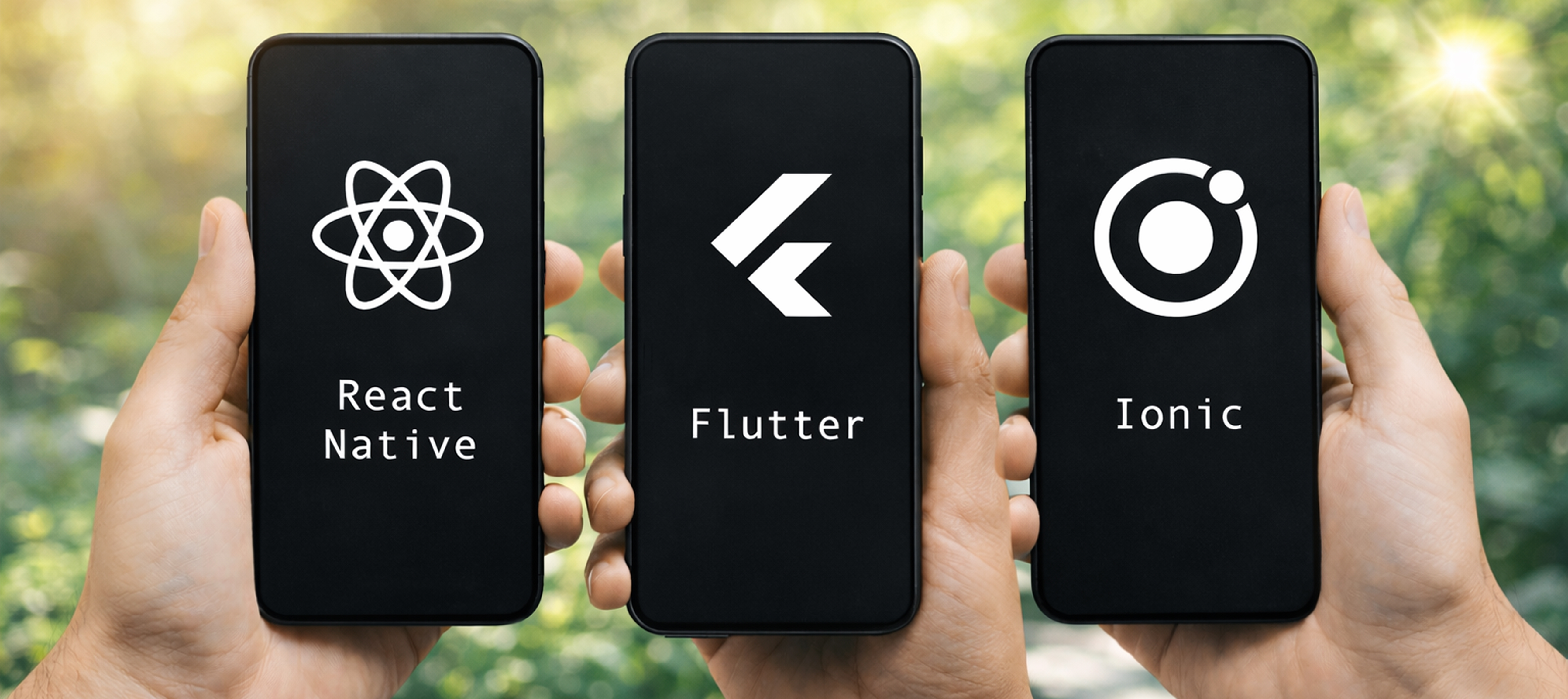
React Native vs Flutter vs Ionic
React Native: JavaScript-Driven Native Performance
Architecture Overview
React Native uses a to communicate with native components. Business logic runs in JavaScript, while UI elements render using native platform APIs.
Strengths
- Near-native performance with optimized rendering
- Large ecosystem of third-party libraries
- Seamless integration with native modules (Swift, Kotlin, Java)
- Ideal for incremental adoption within existing native apps
Limitations
- Bridge architecture may introduce performance bottlenecks in highly complex apps
- Dependency management can become challenging at scale
Ideal Use Cases
- Enterprise-grade mobile applications
- E-commerce and marketplace platforms
- Social networking and real-time applications
Flutter: High-Performance UI with a Rendering Engine
Architecture Overview
Flutter bypasses native UI components and uses its to draw UI directly onto the screen. This eliminates platform inconsistencies and ensures pixel-perfect design.
Strengths
- Consistently high performance across platforms
- Highly customizable UI with rich animations
- Faster development cycles using Hot Reload
- Strong support for Material and Cupertino design systems
Limitations
- Larger app bundle size
- maller developer pool compared to React Native
- Dart language adoption curve
Ideal Use Cases
- High-performance apps with complex UI
- FinTech, healthcare, and real-time dashboards
- MVPs requiring rapid prototyping with premium UX
Ionic: Web-Powered Hybrid Application Development
Architecture Overview
Ionic applications run inside a leveraging modern web technologies. Native features are accessed via Capacitor or Cordova plugins.
Strengths
- Fastest development using web skills
- Single codebase for mobile, web, and desktop
- Strong fit for Progressive Web Apps (PWAs)
- Lower development and maintenance costs
Limitations
- Performance dependent on WebView
- Limited suitability for graphics-heavy apps
- Less native-like experience compared to React Native and Flutter
Ideal Use Cases
- Enterprise internal tools
- Content-driven and form-based applications
- Apps with minimal hardware interaction
Security, Scalability, and Maintainability
- offers robust security when combined with native modules and secure storage solutions.
- reduces UI development time and ensures design consistency, improving user engagement.
- minimizes upfront investment, ideal for MVPs and enterprise workflows.
For long-term scalability, React Native and Flutter are generally better suited for while Ionic excels in
Business Impact: Cost, Time, and ROI
- balances performance and development efficiency for large-scale products.
- reduces UI development time and ensures design consistency, improving user engagement.
- minimizes upfront investment, ideal for MVPs and enterprise workflows.
Choosing the wrong framework can lead to making expert guidance essential.
How We Help You Choose the Right Framework
As an experienced we conduct a deep technical and business analysis before recommending React Native, Flutter, or Ionic. Our approach includes:
- Requirement and scalability assessment
- Performance benchmarking
- Security and compliance evaluation
- Long-term maintenance planning
We deliver that align with your business objectives.
Conclusion
There is no one-size-fits-all solution in mobile app development. each excel in different scenarios. The right choice depends on your app’s performance requirements, UI complexity, and business goals.


